


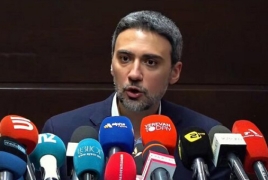


Aram Vardevanyan, representing the Strong Armenia alliance, said during his closing arguments before Armenia's Constitutional Court that audio recordings released during the election campaign, which were later not legally substantiated or were partially dismissed, created a negative perception of the opposition among 21% of voters.
He described the actions of the Anti-Corruption Committee as a political tool used against the opposition, Factor.am reported.
According to Vardevanyan, the election process was marked by systemic and widespread violations that had a significant impact on the final results.
"These elections did not comply with Article 7 of the Constitution. They were neither free nor equal. To support these claims, we presented evidence of widespread hate speech carried out by a third-party actor, supported by facts and confirmed by a ruling of the Administrative Court. We also demonstrated extensive misuse of administrative resources by presenting court rulings and documented evidence. We further argued that the competent authority lacked independence throughout the electoral process," he said.
Vardevanyan also referred to a well-known statement by the founding chairman of the Constitutional Court, Gagik Harutyunyan, arguing that the existence of a Constitution in Armenia does not necessarily mean constitutionalism exists in practice.
He further stated that, during the hearings, the respondent frequently avoided answering direct questions, effectively exercising "the right to remain silent," which he said was unacceptable in constitutional justice.
"We established that the respondent had no answers to a number of issues. During the hearings, we saw how questions could simply go unanswered. I believe that, for the first time in the Constitutional Court's history, we witnessed the respondent effectively invoking the right to remain silent when a direct question from one of the justices received no response whatsoever," he said.
The opposition representative also criticized the pre-election increase in pensions by 10,000 drams, describing it as de facto vote-buying. He argued that for citizens living in extreme poverty, the increase had a decisive influence on their electoral choices.
"This was done at a time when the same authorities had previously argued that such an increase was neither necessary nor possible," he added.
Concluding his remarks, Vardevanyan asked the Constitutional Court to invalidate the Central Electoral Commission's decision approving the election results, citing what he described as the systemic and widespread nature of the violations.
On June 26, Armenia's Constitutional Court began hearings in the consolidated case based on petitions filed by seven political forces challenging the results of the June 7 parliamentary elections. The proceedings are ongoing.