

  Civil group slams ruling party over observer limits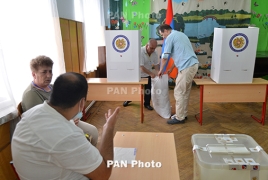 January 26, 2026 - 18:30 AMT PanARMENIAN.Net - The Public Alliance for Checks and Balances has denounced legislative changes adopted on January 23 during an extraordinary session of Armenia’s National Assembly, stating that restrictions on election observers are unacceptable. The alliance emphasized that while the new law does not directly prohibit observation missions, it imposes subjective, bureaucratic, and legal hurdles that could severely weaken public oversight of elections. It also highlighted that the law was passed solely with the votes of the ruling Civil Contract party, without input from the opposition. Because the amendment pertains to a constitutional law, it required support from three-fifths of the parliament members. With 71 deputies, Civil Contract passed it unilaterally, without participation from any other faction. The alliance expressed concern that the amendment was backed by certain individuals and organizations previously regarded as defenders of democracy. It stressed that a system where constitutional laws are changed singlehandedly and electoral observation is restricted cannot be considered democratic. "We urge political forces, legal experts, and human rights defenders to view this issue in the context of emerging authoritarianism and work to prevent a single party from unilaterally amending constitutional laws in the future," the statement read. An attached analysis outlined key risks emerging from the amendments, including:
  Top stories Top stories Grigoryan added that the situation around the world and particularly in the region is very difficult. The Armenian Defense Ministry has denied Azerbaijan's accusations of violating the ceasefire. Armenian Prime Minister Nikol Pashinyan took to social media to thank his Lithuanian counterpart for the contribution. President of the Armenian parliament Alen Simonyan met with the Speaker of the Azerbaijani Milli Majlis Sahiba Gafarova.   Partner news |  Latest news Latest news Viva sees growing demand for cloud services Viva sees growing demand for cloud services  In recent years, medical institutions are starting to make use of Viva’s cloud servicesTurkey replacing term "Central Asia" with "Turkestan" in textbooks The Turkish Ministry of Education is replacing the term "Central Asia" with "Turkestan" in textbooks.Armenian, German presidents meet in Berlin Armenian and German Presidents Vahagn Khachaturyan and Frank-Walter Steinmeier met in Berlin.Armenia assumes presidency of Mediterranean Network of Regulatory Authorities The Commission on Television and Radio of Armenia said it expects productive cooperation in various formats. In recent years, medical institutions are starting to make use of Viva’s cloud servicesTurkey replacing term "Central Asia" with "Turkestan" in textbooks The Turkish Ministry of Education is replacing the term "Central Asia" with "Turkestan" in textbooks.Armenian, German presidents meet in Berlin Armenian and German Presidents Vahagn Khachaturyan and Frank-Walter Steinmeier met in Berlin.Armenia assumes presidency of Mediterranean Network of Regulatory Authorities The Commission on Television and Radio of Armenia said it expects productive cooperation in various formats. |