

  EU to deploy second civilian mission to Armenia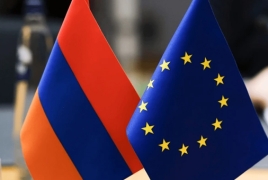 April 15, 2026 - 13:45 AMT PanARMENIAN.Net - European Union ambassadors in Brussels have approved a decision to deploy a new civilian mission to Armenia, preparing it for final approval expected next week at a meeting of EU foreign ministers. According to a proposal by the EU High Representative for Foreign Affairs and Security Policy obtained by RFE/RL, the mission’s mandate, structure, and timelines have been outlined. The mission will aim to “strengthen Armenia’s resilience to hybrid threats by providing strategic and practical advice and support to ministries and security institutions.” The advisory work will focus on policy development, identifying and responding to foreign information manipulation, preventing cyberattacks, and combating illicit financial flows. The mission will also assess capacity-building needs in the security sector to help Armenia more effectively detect and counter such threats using EU standards and methodologies. The document justifying the mission notes that the parliamentary elections scheduled for June in Armenia, followed by local elections and a possible constitutional referendum, are of key importance for both internal stability and regional peace. Earlier, Baku criticized the deployment of unarmed European observers in Armenia near its borders and succeeded in including a provision in the peace treaty with Armenia that third-country forces would not be deployed along the shared border. By sending a new mission, Brussels has emphasized that its goal is to “reduce and neutralize Russia’s destabilizing actions.” One of the documents available to RFE/RL instructs the European External Action Service to “continue discussions with Azerbaijan to explain the purpose of EU support and avoid potential negative impacts on the peace process.” Addressing potential risks, the document highlights not only domestic political developments, external economic pressures, and information manipulation, but also the possibility of a war against Iran, noting that one of Armenia’s only two open borders is with Iran and is critical for communication and the North–South transport and trade corridor. “This tension could further increase Russia’s influence over Armenia’s economy and energy needs and may be exploited ahead of elections,” the document states, adding that there are also risks related to potential migration flows, organized crime, and other illegal activities. The new EU mission is expected to be deployed in Armenia for two years, consisting of 20–30 international staff members, and will operate under the name “European Union Partnership Mission.” It will also be open to participation by third countries, provided agreements are reached with Brussels. “Without undermining the EU’s decision-making autonomy and its unified implementation, third states may participate in the mission on the condition that they cover the costs of their deployed personnel,” the document states. EU observers first arrived in Armenia on February 20, 2023. In January 2025, it was decided that European observers would remain in Armenia’s border regions for another two years, until February 19, 2027. Authorities in Baku have accused the EU mission in Armenia of “espionage” and conducting “binocular diplomacy.”   Top stories Top stories Grigoryan added that the situation around the world and particularly in the region is very difficult. The Armenian Defense Ministry has denied Azerbaijan's accusations of violating the ceasefire. Armenian Prime Minister Nikol Pashinyan took to social media to thank his Lithuanian counterpart for the contribution. President of the Armenian parliament Alen Simonyan met with the Speaker of the Azerbaijani Milli Majlis Sahiba Gafarova.   Partner news |  Latest news Latest news Viva sees growing demand for cloud services Viva sees growing demand for cloud services  In recent years, medical institutions are starting to make use of Viva’s cloud servicesTurkey replacing term "Central Asia" with "Turkestan" in textbooks The Turkish Ministry of Education is replacing the term "Central Asia" with "Turkestan" in textbooks.Armenian, German presidents meet in Berlin Armenian and German Presidents Vahagn Khachaturyan and Frank-Walter Steinmeier met in Berlin.Armenia assumes presidency of Mediterranean Network of Regulatory Authorities The Commission on Television and Radio of Armenia said it expects productive cooperation in various formats. In recent years, medical institutions are starting to make use of Viva’s cloud servicesTurkey replacing term "Central Asia" with "Turkestan" in textbooks The Turkish Ministry of Education is replacing the term "Central Asia" with "Turkestan" in textbooks.Armenian, German presidents meet in Berlin Armenian and German Presidents Vahagn Khachaturyan and Frank-Walter Steinmeier met in Berlin.Armenia assumes presidency of Mediterranean Network of Regulatory Authorities The Commission on Television and Radio of Armenia said it expects productive cooperation in various formats. |