


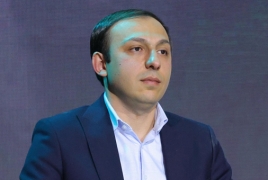


Artsakh Human Rights Defender Gegham Stepanyan said the Armenian authorities’ policy toward displaced Artsakh residents amounts to “victim blaming.”
“We have faced manifestations of hate speech and discriminatory attitudes toward Artsakh residents in Armenia from the very first days of forced displacement,” he said, according to Panorama.am .
According to him, after the loss of Artsakh in 2023, Armenian authorities have attempted in various ways to assign responsibility for what happened.
“One of these manifestations is what in international terminology is called ‘victim blaming,’ and it is used quite frequently,” Stepanyan said.
He emphasized that accusations regarding leaving and fleeing Artsakh have been voiced both by the Speaker of the National Assembly and by Prime Minister Nikol Pashinyan.
“When this propaganda policy was fully exposed, we saw who stood behind it. It is carried out openly by state authorities and spread through pro-government media resources and users, both fake and real, serving them,” Stepanyan stated.
According to him, Artsakh residents are also labeled as “ungrateful,” a characterization that was again recorded during the mentioned incident.
“By accusing Artsakh residents of being ungrateful—claiming that Armenian society had worked for years to sustain them—a false narrative has been inflated. It was built up over 30 years and is now bursting, targeting everyone in its path. Instead of combating the spread of hate, the authorities themselves are fueling it,” Stepanyan said.
Earlier, on September 19, 2023, Azerbaijan launched a large-scale attack against Artsakh, subjecting the region to massive shelling. A day later, on September 20, the Artsakh authorities accepted a ceasefire proposal from the command of the Russian peacekeeping mission, agreeing to Baku’s conditions, including disarmament and the dissolution of the Artsakh Republic.
As a result of the attack, 223 people were killed, including 20 civilians, six of whom were minors. Starting from September 24, forced displacement of Artsakh residents began, with more than 100,000 people relocating to Armenia. According to some data, about 20 Armenians remained in Artsakh, of whom 11 later returned to Armenia, one died, and one was detained.