


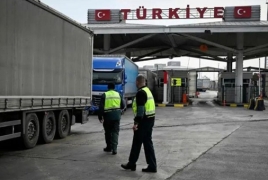


Turkey is considering the possibility of reopening its long-closed border with Armenia to help establish a new trade route linking Europe and Asia, according to an analysis published in the Financial Times, Ermenihaber reports.
The focus is on the Alican border crossing, which has been closed for about 32 years. According to the analysis, Ankara has already begun preparatory infrastructure work at the crossing.
The move could become a key component of the so-called “Middle Corridor,” potentially reducing cargo transit time from China to Europe from around 40 days to 12–15 days.
The analysis also mentions the U.S.-backed TRIPP initiative, aimed at creating alternative trade routes bypassing maritime pathways, including the Strait of Hormuz.
At the same time, experts note that the project faces significant challenges, including infrastructure limitations, differing railway standards, complex customs procedures, and regional geopolitical risks.
According to the report, Turkey is seeking to strengthen its role as a regional transport and energy hub, though implementation largely depends on political conditions and regional stability.
In December 2021, Yerevan and Ankara announced readiness to take steps toward normalizing relations. In 2022, representatives of the two countries agreed in Vienna to open the border for third-country nationals and launch direct cargo flights, but these agreements have not yet been fully implemented.
In September 2025, Turkish envoy Serdar Kılıç visited Armenia. The Armenian Foreign Ministry said the sides discussed steps to implement agreements reached on July 1, 2022, and agreed to accelerate the process.