


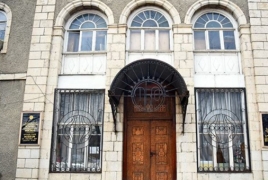


Around 30 state and private museums and collections in Artsakh are facing an existential threat, Hovik Avanesov, vice president of the “National” Historical and Cultural NGO and ombudsman for Artsakh cultural heritage, said in a Facebook post.
He noted that International Museum Day should not be viewed solely as a symbolic occasion and called on the international community to respond practically to situations where cultural heritage is under threat of systematic destruction and total loss, as is currently the case in Artsakh.
“Of particular concern is the situation created in occupied Artsakh, where, as a result of state policy carried out by Azerbaijan, the entire cultural heritage of Artsakh is under a real and ongoing threat of complete and systematic destruction, distortion and appropriation. These processes endanger irreplaceable values not only of Armenian but also of global cultural heritage,” he wrote.
It was noted that after the events of 2023, museum collections in Artsakh faced a high risk of total destruction, dismantling, falsification and deliberate appropriation.
“The cultural heritage of Artsakh, which holds not only national but also universal value, has been subjected to a systematic policy aimed at distorting historical memory, erasing cultural identity, and reattributing or physically destroying historical and architectural values. This situation has required more consistent and targeted attention from the international community as an urgent issue of cultural heritage protection.
Under these conditions, International Museum Day should be regarded not only as a symbolic celebration, but also as a day of responsibility for the international community aimed at protecting cultural heritage, raising awareness of threats, and promoting preventive action,” the post said.
On September 19, 2023, Azerbaijan launched a large-scale attack against Artsakh, placing the territory under massive shelling. As a result, one day later, on September 20, the Artsakh authorities accepted the proposal of the command of the Russian peacekeeping mission for a ceasefire, agreeing to Baku’s conditions, including the disarmament of the Defense Army and the dissolution of the Republic of Artsakh. The attack left 223 people dead, including 20 civilians, six of whom were minors. Starting from September 24, the forced displacement of Artsakh Armenians began, with more than 100,000 people forcibly displaced to Armenia. According to some reports, around 20 Armenians remained in Artsakh, of whom 11 later returned to Armenia, one died and one was detained.